
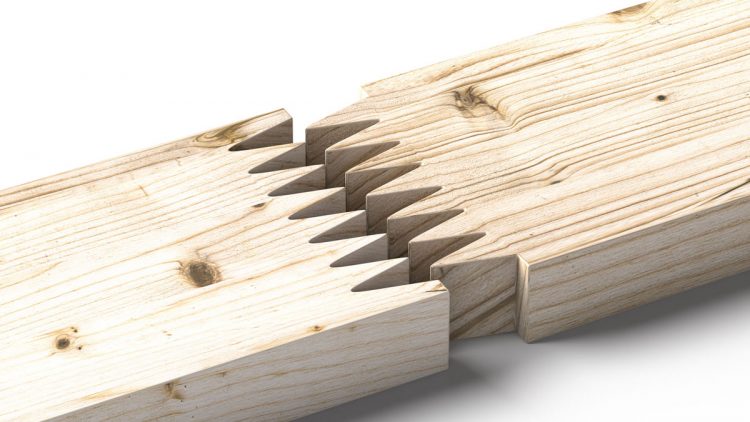
Types Of Woodworking Joints
When you want to obtain the best outcome from your woodworking, it is a good idea to think about which types of woodworking joints you are going to use. There are a lot of different types of wood joints available that all have both their advantages and disadvantages. This post is going to guide you through the many various woodworking joints, from favorable three-way wood joints and much more, that you may come across in the field of woodworking.
What Are the Different Types of Woodworking Joints?
The following are just some of the types of woodworking joints:
Butt Joint
A butt joint utilizes a straightforward method in which two pieces of material are joined with one another at their ends, devoid of any special cutting or shaping. Even though it is straightforward, the butt joint is additionally the more vulnerable of the wood joinery types.
Tongue and Groove Joint
Tongue and groove joints are most typically found in flooring as they enable you to join two edges together to create one flat surface. This type of joint is strong, ideal for re-entrant angles, paneling and flooring.
Half Lap Joint
This type of joint entails two pieces of material that overlap. In half-lap joints, you take out the material from the two pieces. Therefore, the general thickness is identical to the thickest piece of material. A lot of the time, the two pieces used for these types of joints are of the same thickness, and you take out an identical amount of material from both.
Mitred Butt Joint
Also referred to as a mitre joint, you can construct one by cutting the edges of two material pieces at a forty-five-degree angle for forming a ninety-degree angle when their edges are joined. These types of joints are somewhat straightforward to construct; nevertheless, they are vulnerable.
Mortise And Tenon Joint
Woodworkers have used this wood joinery method for 1,000’s of years as they are robust, stable and can be used in different projects. They are connected by either gluing or locking into place. Nevertheless, precise cutting is necessary to make a triumphant mortise and tenon, which makes it a challenging joint to use.
Biscuit Joint
When constructing a biscuit joint, a crescent-like hole is cut utilizing a small circular saw blade in the ends of two pieces of joining material. A wooden biscuit is then coated with glue and immediately placed into the holes, securely joining the pieces.
Pocket Joint
This type of joint is constructed by drilling a hole (typically at a fifteen-degree angle) into one piece of material and then attaching a second to it utilizing self-tapping screws. This method requires great accuracy and the proper method to guarantee that gaps do not show up.
Dovetail Joint
Timber framing and furniture are the most common places where you are going to find dovetail joints. This type of joint is extremely resistant to being separated so that it can tolerate day-to-day wear and tear. Pins are cut to expand from one material piece that interlocks with tails cut on the other one.
Rabbet Joint
When constructing this type of joint, channels are cut into the side of a piece of material, and a second piece is then secured into the channels. This joinery method is typically used when inserting panes of glass or panels.
Finger Joint
Finger joints are also referred to as comb joints and are constructed by cutting several interlocking sections into two pieces of wood. The two pieces are then adhered to one another, and the resulting cross-sectionally joint takes the look of interlocking fingers.
Woodworking Supplies Mesa by Timber Woodworking
Timber Woodworking offers hardwoods in Mesa, Arizona. We specialize in woodworking tools, equipment, and supplies for commercial woodworking cabinet shops or furniture manufacturers as well as the home shop hobbyist. Contact us today, or call if you should have any questions.